Framework
-
Systemic change requires cross-sector collaboration. We designed this Field Guide as an actionable roadmap for change-makers across the entire built environment:
Local Authorities & Urban Planners: To map regional bio-resources and design circular local economies.
Policymakers & Regulators: To identify key regulatory levers and adapt building codes for regenerative practices.
Architects & Developers: To move from theoretical concepts to scalable, nature-based building demonstrators.
Researchers & Community Leaders: To build robust stakeholder coalitions and drive participatory decision-making.

-
At the core of our Field Guide is the Systemic Framework, Bauhaus Earth’s unique approach to the Regenerative Transformation of the Built Environment. Rather than a purely theoretical model, this framework defines concrete “Entry Points“- essential areas of action that must be actively addressed to drive the transformation of our built environment.
Developed directly from our research and pilot projects, it serves as a holistic anchor and guide for change-makers.
To achieve true systemic change, transformation must happen across eight interconnected dimensions:
1. Ecosystem Care: Managing and restoring natural systems.
We focus on forests, soils, and landscapes to ensure regenerative material sourcing. This field emphasizes biodiversity enhancement and maintaining a healthy ecological-social balance.2. Material Transition: Shifting towards low-carbon and nature-based materials.
We enable the use of circular construction materials to reduce embodied carbon. By optimising resource use and enhancing circularity through reuse and recycling, we design for a world without waste.3. Socio-Spatial Equity: Ensuring just and inclusive access.
Regenerative urban development must address historic inequities. We work to provide inclusive access to resources and spaces while actively promoting cultural heritage within the built environment.4. Building Practices and Culture: Designing for environmental and human well-being.
Buildings should actively contribute to their surroundings. We use circular design principles and low-carbon materials to implement net-positive impact strategies that benefit both people and the planet.5. Economic Innovation: Creating financial models for scaling.
To make the transition possible, we need new markets and business strategies. This field supports the scaling of regenerative materials and the development of equitable local economies.6. Enabling Policy Frameworks: Developing legal and regulatory structures.
We identify the policy levers needed to drive systemic change. By creating incentives and enforcing standards, we build the regulatory foundation for a regenerative construction sector.7. Collaborative Governance: Establishing participatory decision-making.
Transformation requires shared responsibility. We engage multiple stakeholders in transparent processes to co-create material transition policies that reflect the needs of the entire community.8. Capacity Building: Supporting communities and professionals.
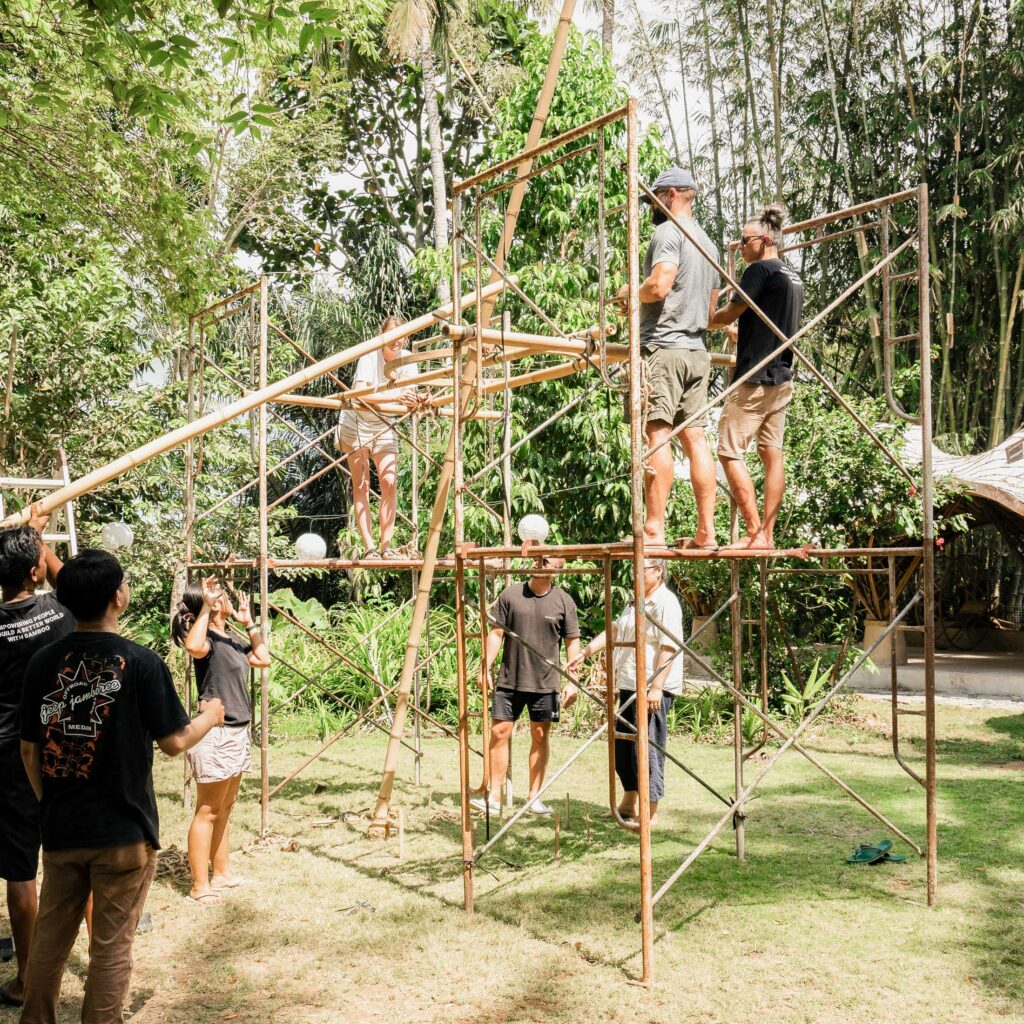
Sustaining the transition requires knowledge. Through education, training, and cross-sector collaboration, we empower institutions and individuals to drive the regenerative shift forward.These segments interlock to create a cohesive roadmap, allowing you to identify specific entry points for transformation while maintaining a systemic perspective. In our Field Methods, you will find tried and tested methods mapped directly to these intervention fields.
-
While the intervention fields define where we act, our three-phase process defines how we move from initial analysis to long-term impact.
Phase 1: Grounding – Understanding What Is
In this phase, you map the material, spatial, social, and institutional conditions that shape your region. Explore the construction sector, resource flows, key actors, and existing policies. The goal is to uncover local assets, barriers, and blind spots — and build a shared understanding of the system you want to transform.Phase 2: Piloting – Envisioning What Should Be
Bring stakeholders together to co-create a vision for your region’s regenerative future. Together, you define goals, explore pathways, and design context-specific strategies. This phase turns insights into direction — grounded in local priorities and collective imagination.Phase 3: Scaling – Planning How to Act
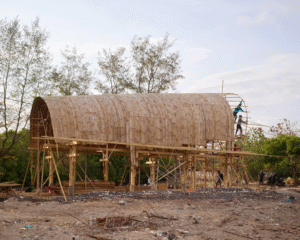
Translate ideas into action. Prototype solutions, launch pilot projects, and use cultural formats to make change visible. This phase is also about feedback: track impacts, refine your strategy, and build a long-term roadmap for implementation across actors and scales. -
Ready to act? The Field Guide is brought to life through tried and tested methods. We have applied these methods in our global case studies and mapped them specifically to the intervention fields and phases listed above.
Whether you are just starting to map your region or are ready to scale a pilot project, our Field Methods provides the blueprints to move forward.